
MDR market today
0
Approximate global MDR market size in 2025 (industry research, $4–6B band).
Mandala IT runs the SOC your team can't staff alone — real-time detection, automated containment, and the evidence trail your board, cyber-insurer, and regulator will ask for. Outcome-aligned pricing: retainer covers the standing team, per-event fees track blocked attacks, surfaced vulnerabilities, and contained incidents.
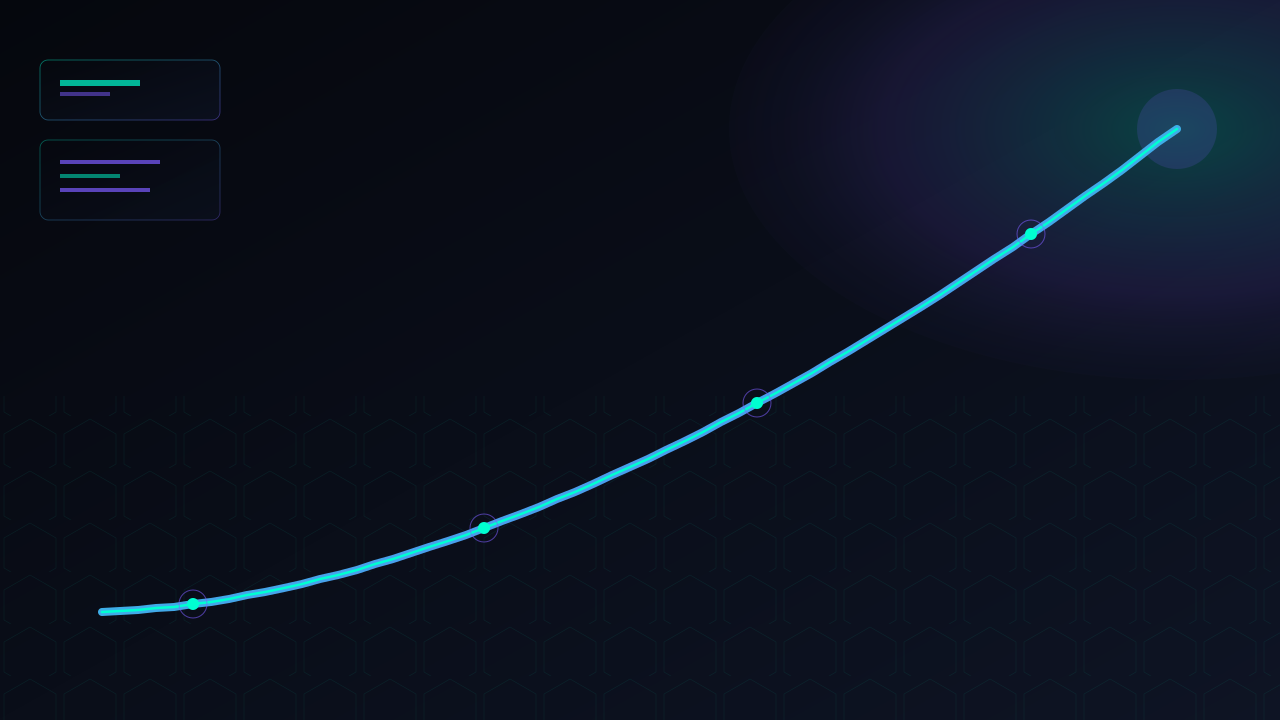
Cybersecurity is no longer a cost center — it's the operational license to run a digital business. Within it, Managed Detection & Response (MDR) is the segment Mandala IT targets, and it is compounding fastest.
Approximate global MDR market size in 2025 (industry research, $4–6B band).
Projected size — driven by AI-powered threats, cloud expansion, and regulatory pressure.
Estimated annual CAGR across MDR segments — one of tech's strongest growth profiles.
Boards no longer ask if they'll be attacked — only when. Cybercrime damage is measured in hundreds of billions, trending to trillions, and CFOs are signing defensive budgets accordingly.
Buyers are moving away from passive software licenses toward performance-based protection — paying for measurable prevention, not shelfware. That is exactly where Mandala IT is positioned.
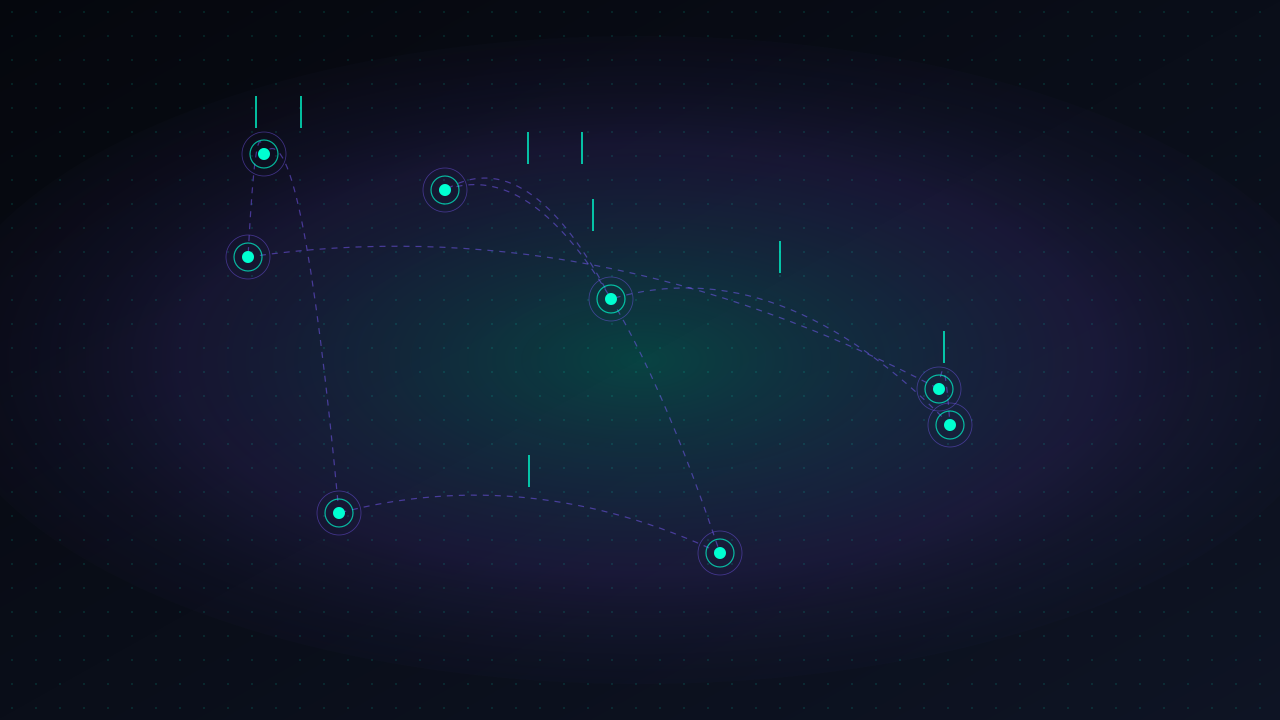
Eight overlapping threat categories — every one is growing in scale, speed and AI sophistication.
Encrypted shutdowns, double-extortion, supply-chain pivots.
Automated reconnaissance, deepfake social engineering, model abuse.
Mass PII exfiltration, customer database compromise.
Misconfigured workloads, token theft, lateral movement.
Credential harvesting, MFA fatigue, account takeover.
Payment manipulation, BEC, transaction tampering.
Edge exploits, persistence, command-and-control.
Operational shutdowns of services people depend on.
Mandala IT operates inside the rapidly expanding cybersecurity protection and attack-response sector, delivering advanced security technologies designed to detect, respond, and prevent in real time.
“The vision aligns with the strongest trend in cybersecurity: AI-powered automated protection combined with real-time response.”
Base retainer holds the team on call. Per-event fees track work delivered — blocked intrusions, patched vulnerabilities, incidents contained. Caps agreed up front so a noisy month never blows up the budget.
Retainer covers the analyst hours; per-event fees scale with actual threat volume, not with your seat count.
Our fee rises when our work prevents loss. It does not rise because your headcount grew.
If the controls don't fire, you don't pay for them. Most months they fire constantly.
A 24/7 SOC needs 8–12 analysts to staff properly. We staff it; you carry the retainer line.
Every billable event maps to a board-pack line: prevented, contained, surfaced, remediated.
Replace 3–5 point tools (SIEM, EDR, vuln scanner, phishing gate, IR retainer) with one team that operates them all and owns the verdict.
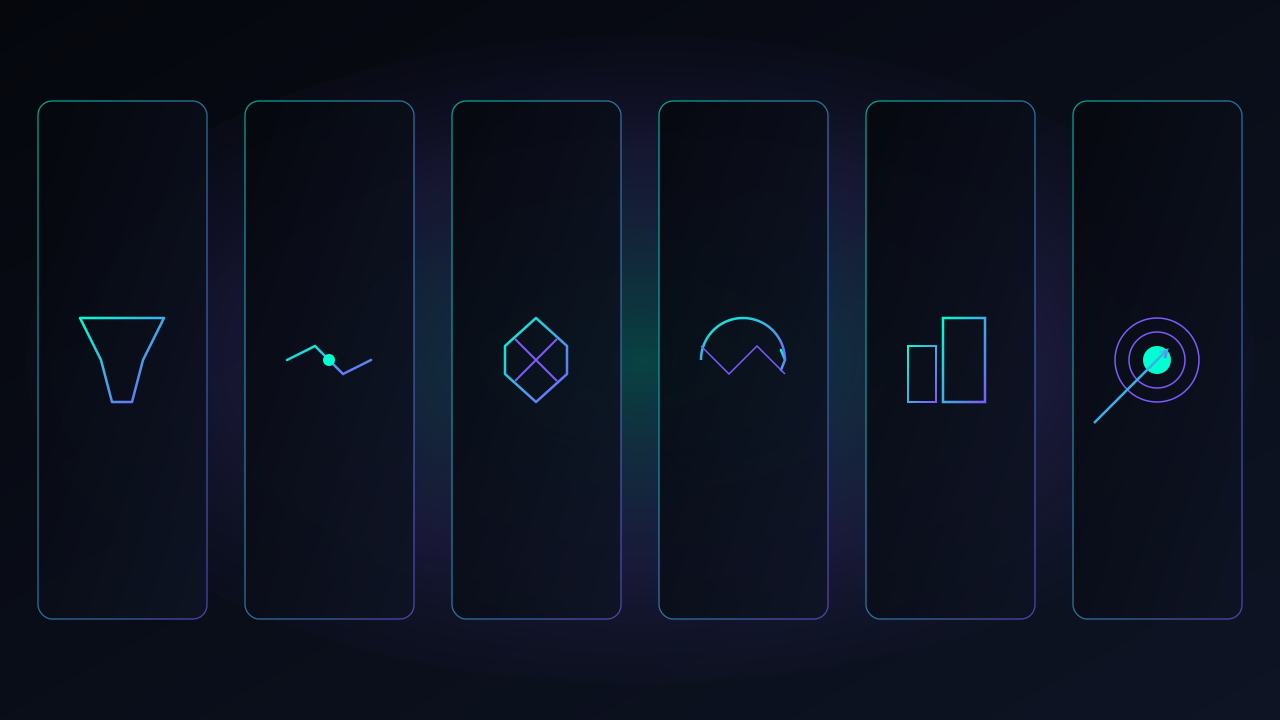
A unified detection-and-response layer for the surfaces that revenue actually runs on.
The CISO inherited a 24/7 detection function staffed by 3 generalist engineers, an alert backlog above 2,400/week, and a board demanding sub-15-minute response on critical incidents. Their existing SIEM and EDR licences had 18 months left; replacing them was not an option.
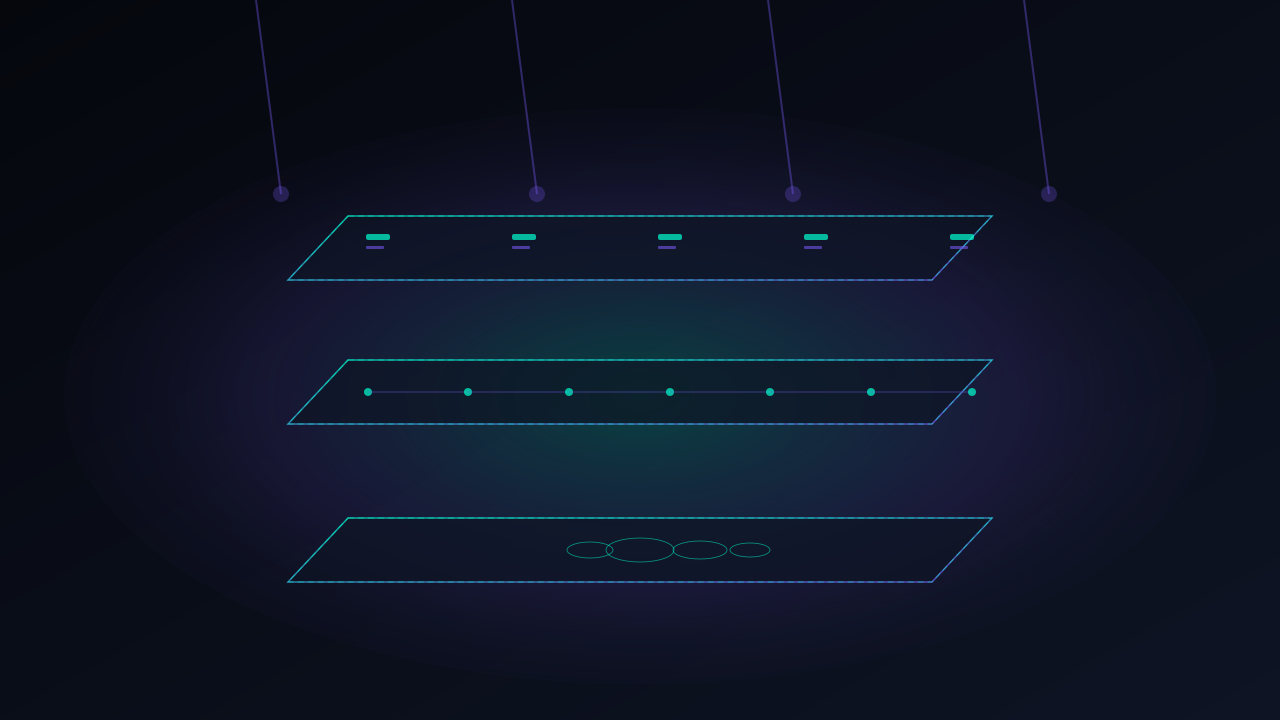
Every customer session is evaluated by five cooperating layers in under two seconds. Each layer produces a measurable defensive event — and each delivered outcome is what the per-event fee bills against.
Decide who is on the other end of every session.
Decide whether the behavior is real, in real time.
Stop the payload at the door of the application.
Decide whether the source is already known to be hostile.
Your team's case workspace. Where our hours and your per-event fees are reconciled each month.
Attackers use AI to automate intrusion, phishing and code exploitation.
Every new workload widens the attack surface — defense must scale with it.
Governments worldwide are mandating stricter cyber and data-protection controls.
Skilled defenders are scarce — managed detection becomes a structural buy.
Boards demand seconds-to-minutes response — not hours or days.
Note. Scope, deliverables, timelines, and SLA tiers are agreed in a mutual Statement of Work. Commitments on this page are illustrative; binding terms live in the engagement contract.
Managed cybersecurity services — design, build, and 24/7 operation of detection, response and attack-mitigation programs for service websites, e-commerce platforms, customer databases and digital infrastructure. We deliver the team, the tooling, and the evidence trail.
Base retainer covers the standing SOC team. Per-event fees track work delivered — blocked attacks, patched vulnerabilities, incidents contained, with caps negotiated up front.
Engagements start from USD 10,000 for a focused assessment. Project, managed-service, and multi-year retainer pricing is quoted under signed engagement scope.
Any-company CISO — mid-market and lower-enterprise where in-house security teams are partial or stretched. Managed Detection & Response (MDR), incident response retainer, vulnerability management, and security-engineering staff augmentation are our core offerings.
We commit to measurable improvement against your baseline — quantified per engagement in the Statement of Work. Absolute outcome guarantees are vendor-fiction; we offer SLA-backed commitments and clear remedies instead.
Scoping call within 2 business days. Signed Statement of Work typically within 7–14 days. Monitoring live within 30 days of SOW for standard engagements; emergency incident-response retainer can be activated within 24 hours.
We deliver primarily with directly-employed analysts and engineers. Where a vertical needs specialist coverage (forensics, firmware analysis, jurisdiction-specific filings), named partners are disclosed in the SOW before signature — never silently white-labelled.
We integrate with your existing stack rather than displace it. Our team runs the operating layer over the tools you've already paid for — we tune them, staff the SOC against them, and own the verdict and evidence chain. If a tool is genuinely failing, we say so in writing.
Region-specific options — EU, UK, US, Israel, GCC — are scoped per engagement. BAA (US healthcare), DPA (EU), and ISO 27001-aligned controls are issued under the engagement contract. Production data and PII do not leave your designated region without written consent.
After the first scoping call, under mutual NDA. Most of our clients are regulated and contractually cannot be named publicly. Reference calls with comparable-size buyers in your vertical are arranged before SOW signature.