
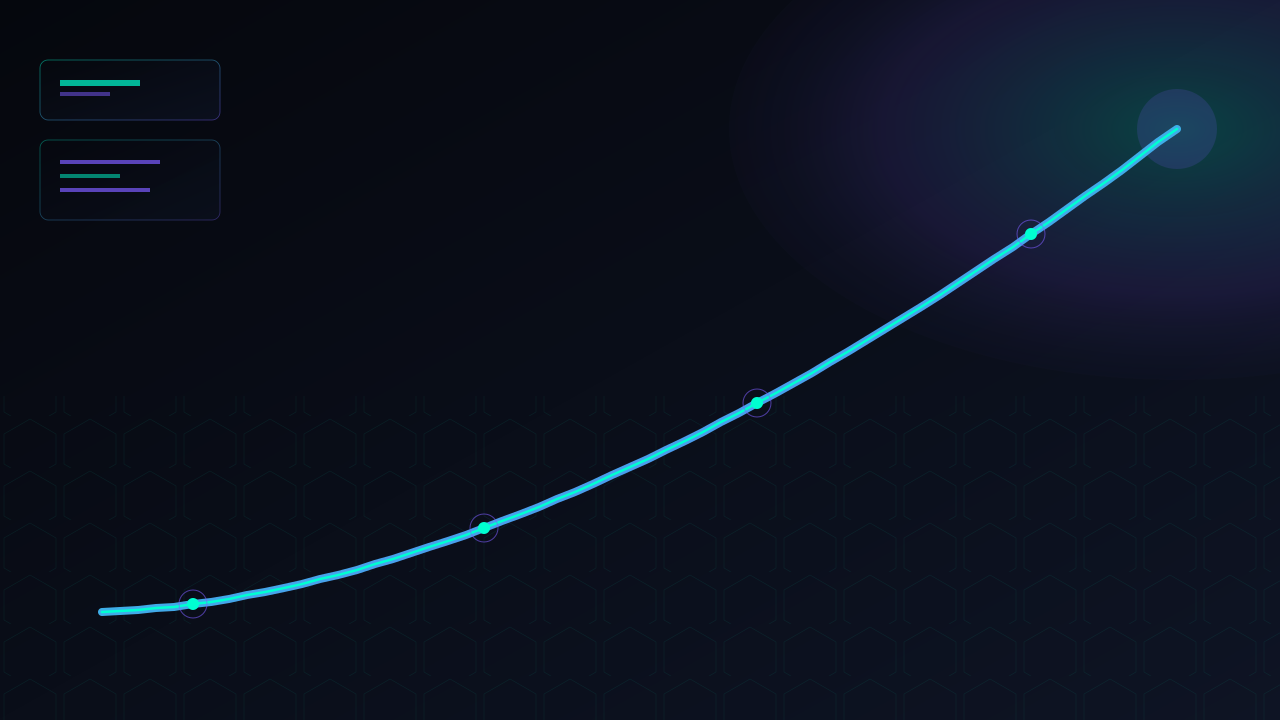
Avg healthcare breach cost
0
Highest of any industry — IBM Cost of a Data Breach (2024).
Mandala IT protects hospital networks, patient portals, and connected medical devices against the threats that disrupt care and trigger HIPAA breach clocks — with BAA-capable architecture and audit-ready evidence by default.
Healthcare cybersecurity is no longer optional spend — it's the operational license to provide patient care.
Highest of any industry — IBM Cost of a Data Breach (2024).
Projected — from ~$13B today, growing ~18% CAGR through 2030.
Reported ransomware incidents impacting US hospital systems annually.
Hospital ransomware is now a patient-safety event. HHS OCR penalties scale with severity, and state laws keep adding new disclosure obligations on top of HIPAA.
Healthcare procurement prefers fixed-fee predictability bundled with BAA coverage — the structure hospital IT actually procures.
Eight overlapping threats — every one disrupts care, triggers HIPAA breach clocks, or both.
Mass theft of patient records — the highest-value data on dark-web markets.
Encrypted EHRs force ambulance diversion, surgery cancellation, ICU degradation.
Credential stuffing against MyChart-class portals.
IoMT — infusion pumps, MRI, monitors — as network entry vectors.
Clinician access to celebrity / colleague / family records.
Compromised contractor or clearinghouse access (Change Healthcare 2024).
Targeted spear-phishing of physicians and billing staff.
Operational shutdowns with documented patient-safety dimensions.
Mandala IT operates inside the rapidly expanding healthcare cyber segment, delivering a unified detection-response-and-evidence layer designed to defend clinical systems, document incidents, and meet HIPAA breach clocks.
“Healthcare cyber is patient-safety cyber. The right vendor brings detection and the breach-notification paper trail that examiners will accept.”
Mandala IT combines performance metrics with capped monthly billing that bundles BAA coverage.
Fixed monthly fee with BAA bundled — no per-event sticker shock.
Quarterly performance metrics reported to compliance and board.
One contract can cover a hospital, a system, or a regional health network.
Designed for BAA-bound deployment — minimum-necessary access enforced by default.
Same engine serves hospital CISO, ambulatory IT director, and payer compliance lead.
Every billable event has an audit chain — when HHS OCR or state AG calls, the trail is ready.
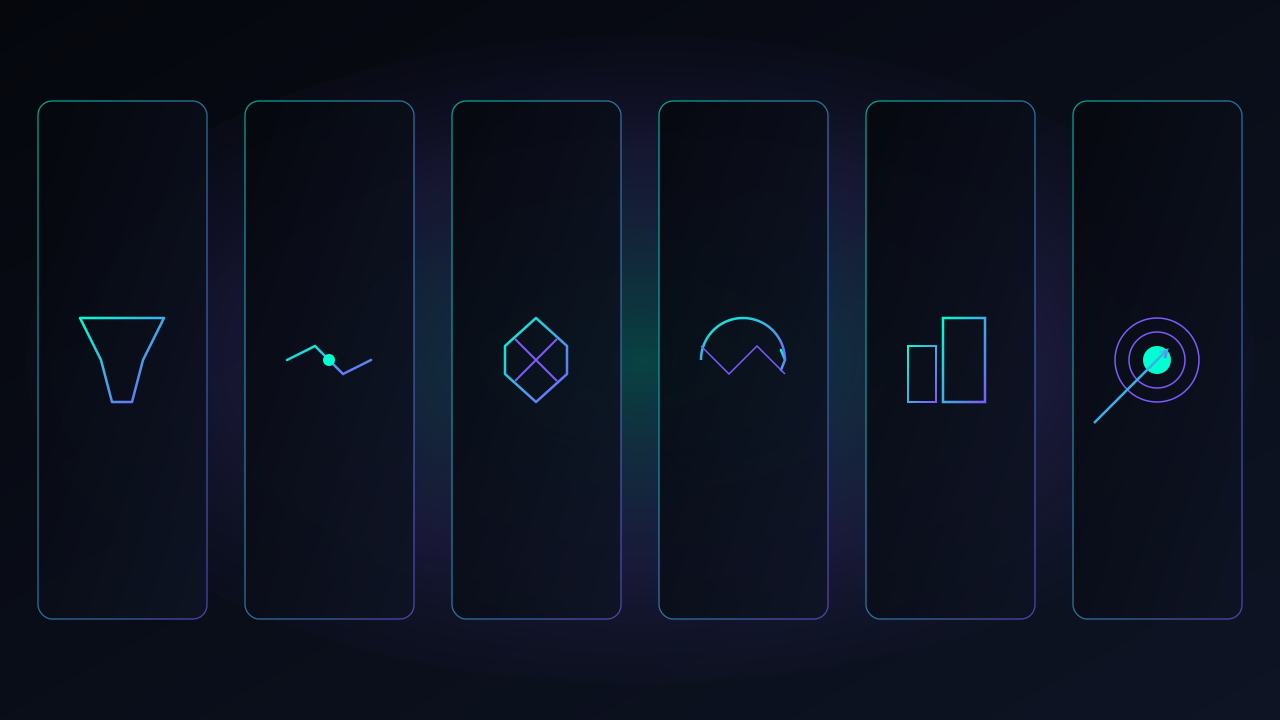
Five pillars under one engine — the bundle every hospital CISO + Privacy Officer buys together.
HHS OCR had flagged minimum-necessary access weaknesses after a celebrity-record snooping incident. Hospital leadership was equally worried about a clinician-MFA rollout that previously slowed an academic medical centre's ED throughput by 3%.
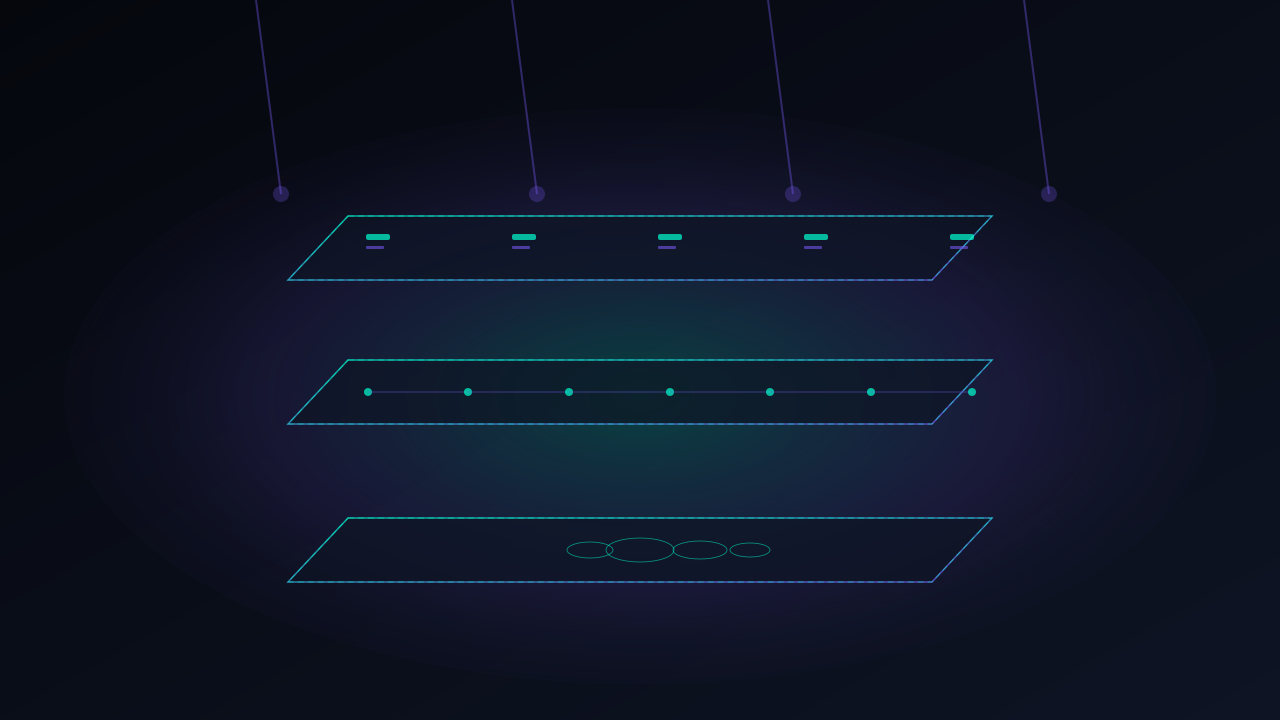
Every relevant event is evaluated by six cooperating layers in under two seconds.
Decide who is accessing the record — patient, clinician, billing staff, contractor.
Decide whether the access is legitimate, in real time.
Stop the payload at the door of the patient portal and clinical app.
Decide whether the source is already known to be hostile.
Your CIO and Privacy Officer's cockpit. Where work delivered and metrics for board review live side by side.
Produce the notification package HHS OCR / state AG / affected patients will receive.
Documented patient-safety events drive insurance pressure and board mandates.
Every connected medical device is a network entry vector.
Penalty volume and per-violation severity rise year-over-year.
Texas, California and others layer additional disclosure on top of HIPAA.
Model-risk governance now applies to clinical-AI vendors.
Note. Scope, deliverables, timelines, and SLA tiers are agreed in a mutual Statement of Work. Commitments on this page are illustrative; binding terms live in the engagement contract.
PHI is processed under BAA-capable architecture with encryption at rest and in transit, role-based minimum-necessary access, and hash-chained access audit logs.
Architecture is designed for BAA-capable deployment and HIPAA-aligned controls. Formal HITRUST certification is on the roadmap; the timeline is addressed under signed deal-room access.
Fixed-fee monthly billing with BAA bundled. Performance metrics reported quarterly. Multi-year contracts with floor-and-cap structures.
Mid-market US hospital systems, regional health networks, ambulatory groups, and payers. Tier-1 academic medical centers via partner channels.
We commit to measurable improvement against your baseline — quantified per engagement in the Statement of Work. SLA-backed commitments and clear remedies, not vague guarantees.
Scoping call within 2 business days. Signed Statement of Work typically within 7–14 days. Monitoring live within 30 days of SOW for standard engagements; emergency incident-response retainer can be activated within 24 hours.
We deliver primarily with directly-employed analysts and engineers. Where a vertical needs specialist coverage (forensics, firmware analysis, jurisdiction-specific filings), named partners are disclosed in the SOW before signature — never silently white-labelled.
We integrate with your existing clinical-security stack rather than displace it. Our team runs the operating layer over the tools the system has already procured — clinician-MFA, IoMT visibility, breach-notification drafting, HHS-OCR-ready evidence. If a tool is genuinely failing BAA expectations, we say so in writing.
Region-specific options — EU, UK, US, Israel, GCC — are scoped per engagement. BAA (US healthcare), DPA (EU), and ISO 27001-aligned controls are issued under the engagement contract. Production data and PII do not leave your designated region without written consent.
After the first scoping call, under mutual NDA. Most of our clients are regulated and contractually cannot be named publicly. Reference calls with comparable-size buyers in your vertical are arranged before SOW signature.